
Deep Vein Thrombosis (DVT)
Rapid diagnosis and life-saving interventional care for blood clots to prevent permanent leg damage and pulmonary embolism.

Deep Vein Thrombosis (DVT)
Rapid diagnosis and life-saving interventional care for blood clots to prevent permanent leg damage and pulmonary embolism.
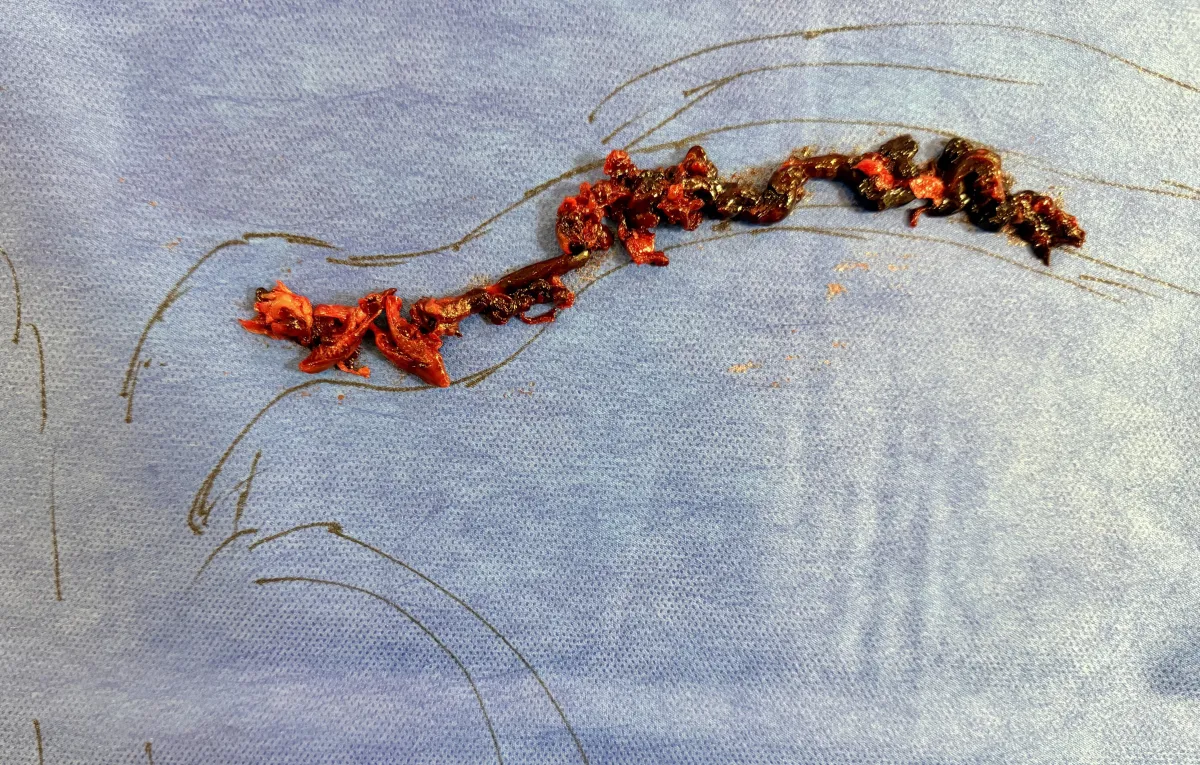
Actual patient images
A Serious Clinical
Condition
Deep Vein Thrombosis, or DVT, occurs when a blood clot forms in a deep vein, most commonly in the leg. DVT can cause pain, swelling, redness, warmth, and tightness in the affected limb. In some cases, a clot can travel to the lungs and cause a pulmonary embolism, which can be life-threatening.
At Vascular Surgeons of Houston, we provide comprehensive evaluation and treatment for DVT, from blood thinners and ultrasound monitoring to advanced minimally invasive clot removal when appropriate.
Risk Factors
DVT risk may increase with recent surgery, hospitalization, prolonged sitting or travel, injury, cancer, pregnancy, hormone therapy, smoking, obesity, prior blood clots, family history of clotting disorders, or certain medical conditions.
How DVT Is Diagnosed
Diagnosis usually begins with a physical exam and vascular ultrasound. Ultrasound allows us to evaluate the veins, locate the clot, and determine whether it is acute or chronic. In select cases, additional imaging may be needed.
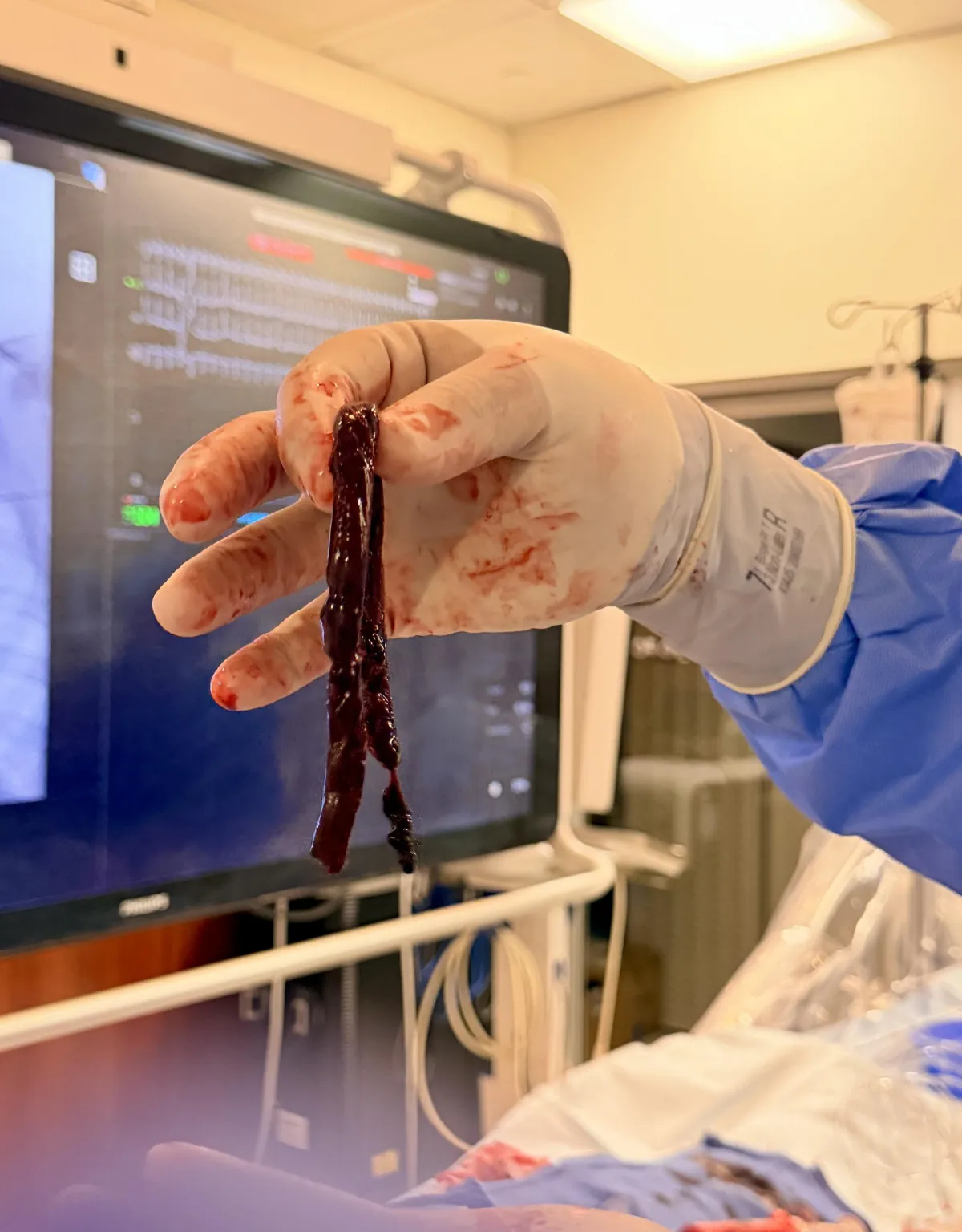
Actual patient images
Common Symptoms of DVT
Leg or arm swelling
Pain, cramping, or tenderness
Warmth or redness of the skin
Tightness or heaviness in the limb
Some patients may have minimal symptoms, which is why prompt evaluation is important if a clot is suspected.
Treatment Options
Blood Thinners
Most DVTs are treated with anticoagulation medication, commonly called blood thinners. These medications help prevent the clot from growing and reduce the risk of pulmonary embolism.
Compression Therapy
Compression stockings may help reduce swelling, improve comfort, and support venous circulation during recovery.
Minimally Invasive Clot Removal
For large, severe, or extensive clots, especially those involving the pelvic or upper thigh veins, minimally invasive treatment may be recommended. This may include venous thrombectomy, catheter-directed clot removal, or clot-dissolving therapy in carefully selected patients.
Treatment of Underlying Vein Narrowing
Some patients develop DVT because of vein compression or narrowing, such as iliac vein compression. In these cases, balloon angioplasty or venous stenting may be needed to improve blood flow and reduce the risk of recurrent clotting.

Long-Term Follow-Up
After a DVT, patients may need follow-up ultrasounds, medication management, compression guidance, and monitoring for post-thrombotic syndrome, which can cause chronic swelling, heaviness, skin changes, or leg ulcers.

When to Seek Emergency Care
Seek emergency care immediately for chest pain, shortness of breath, coughing blood, fainting, or sudden severe worsening symptoms. These may be signs of pulmonary embolism.

Schedule a DVT Evaluation
New leg swelling, pain, or suspected blood clot should be evaluated quickly.
Interventional
Approach
We provide rapid diagnosis and evidence-based treatment to reduce complications and protect your long-term vascular health.

Anticoagulation
Evidence-based medication management to prevent clot growth and recurrence.
Compression Strategies
Clinical-grade compression to reduce swelling and prevent post-thrombotic syndrome.
Clot Removal
Minimally invasive endovascular procedures for severe or extensive blockages.
Risk Prevention
Personalized plans including lifestyle and movement protocols to lower future risk.
"DVT management is a race against time. Our goal is to stabilize the clot, prevent its migration, and restore flow to prevent chronic leg swelling later in life."
Dr. Neil Desai
The Desai Difference
Comprehensive DVT management in Houston

Rapid Diagnosis
We prioritize suspected DVT cases for immediate diagnostic ultrasound to rule out life-threatening issues.

Evidence-Based
Treatment protocols aligned with the latest Society for Vascular Surgery (SVS) clinical guidelines.
PE Prevention
Our primary focus is preventing the migration of clots to the lungs, a condition known as Pulmonary Embolism.
Restore your Flow
Don't wait for complications. Schedule your expert assessment today and start your journey to recovery.

Board-certified vascular surgery specializing in advanced life-saving technologies.
NAVIGATE
CONNECT


CLINIC
Monday – Friday : 8:00am – 5:00pm
Saturday-Sunday : Closed
Restoring Flow.
Renewing Life.
Schedule a consultation with Dr. Desai today and experience advanced, compassionate care for your recovery.